
E-waste – why plastic isn’t our only problem
If you haven’t heard of the term e-waste you won’t be alone. Whilst plastic pollution is a battle we are already fighting we are only just waking up to the reality of e-waste and yet it is already one of the biggest challenges in the global waste problem.
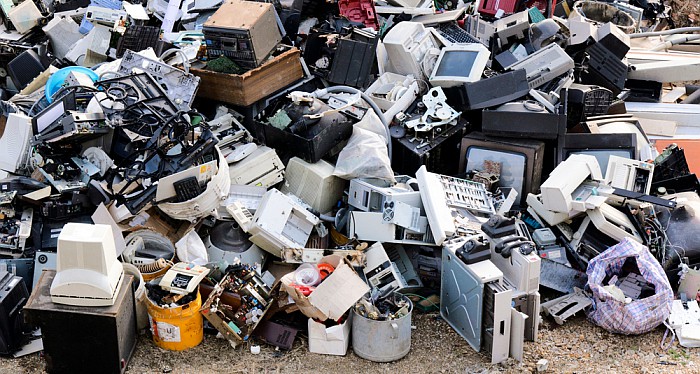
What is e-waste?
''Electronic waste, or e-waste, refers to all items of electrical and electronic equipment (EEE) and its parts that have been discarded by its owner as waste without the intent of re-use.''
Step Initiative, 2014
Half of all e-waste comes from our personal devices - computers, screens, smartphones, tablets and TVs. The rest is larger household appliances, as well as heating and cooling equipment.*
Our devices enable so much of what we do
You're probably reading this blog post on your smart phone, or your laptop. If you're working, you may have both close to hand and, maybe even a tablet too? We all use devices, in fact many of us have multiple devices, and most of us couldn't live without them. They are now an indispensable part of our lives and bring us countless benefits from increased productivity and communications, to networking and creativity. They enable so much of what we do.
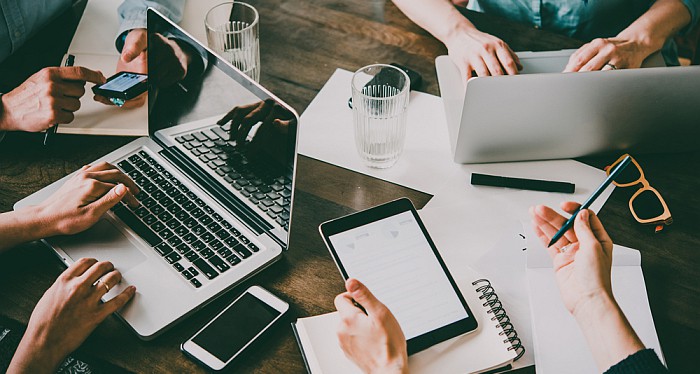
Many of us have multiple devices and they are now an indispensable part of our lives.
But how often do you change your devices, or if you run a business, those of your employees?
The technology industry entices us with its rapid rate of innovation and shiny new products. Like fast fashion, we find ourselves clamouring for the latest models, and the lifespan of our devices is cut short. We replace them frequently, and often before they are used to their full potential. We have an insatiable appetite for brand new and our cast out tech becomes part of the e-waste mountain.
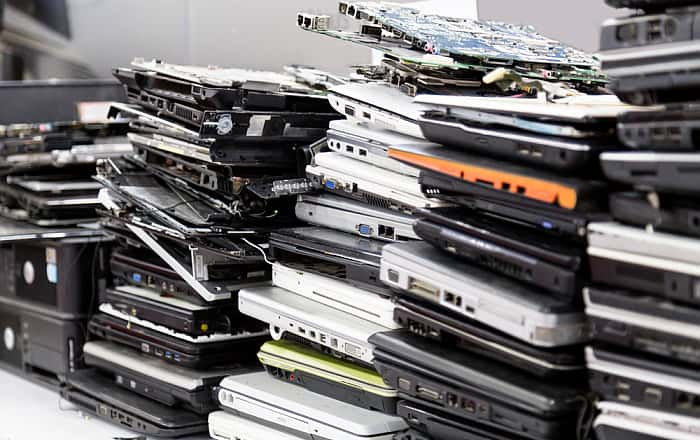
The amount of e-waste reflects the rising demand, together with the pace of development, shorter technology lifespans and falling costs.
E-waste is the world’s fastest growing and yet one of the least recycled waste streams*
We produce 50 million tonnes of e-waste a year, equivalent to 4,500 Eiffel towers.* By the end of next year that figure will increase to more than 52.2 million tonnes and, alarmingly, only 20% of e-waste is recycled appropriately.*

If no action is taken the estimated amount of waste will more than double by 2050, to 120 million tonnes, annually.
So, what happens to our computers, phones and other e-waste?
Even in Europe, with the highest rate of recycling, only 35% of e-waste is treated appropriately**. The rest is incinerated, ends up in landfill or is illegally exported to developing countries. E-waste doesn’t just disappear, it ends up somewhere, contaminating air, water, and soil.

The value of all e-waste is approx. $62.5 billion, annually*
E-waste is not waste
Mis-treating e-waste is not only a hazard to human health and the environment but also means we are wasting valuable resources. The devices on your desk have a big eco-footprint because their manufacture not only produces CO2, but also consumes water and rare materials such as gold, copper and palladium.
Our second-hand goods have an economic value and an environmental cost. Keeping electronics out of the e-waste pile, and extending their life, has huge benefits. We can reduce future carbon emissions and make the most of precious and scarce resources.
Tackling the issue head-on
We’ve heard of consuming consciously with plastic and clothes, now it is time to tackle electronics. The environmental damage caused by unnecessary electronic waste is a massive global problem we all need to work towards solving. If we work together, we can effect positive change.
At cultivate.IT, we want to live in a world empowered by digital innovation and the latest technologies without compromising the environment for future generations. We are passionate about protecting the planet and we want a cleaner world, free from waste and the damaging effects of CO2.
Our mission is two-fold; first we want to raise awareness of the e-waste issue and then drive the transition to sustainable solutions, making refurbished IT equipment the first choice for schools and businesses.
Sustainable solutions for electronics - how you can help;
- Use your devices for as long as possible – think twice before you buy the next model
- Give your devices a second life - make sure they are refurbished or recycled
- Buy refurbished - save electronics from landfill
- Help us to raise awareness - spread the word and inspire others to make more sustainable choices
You can become part of the solution. Join us as we take on the e-waste challenge.
If you are ready to choose refurbished, we are here to help.
E-waste is also known as;